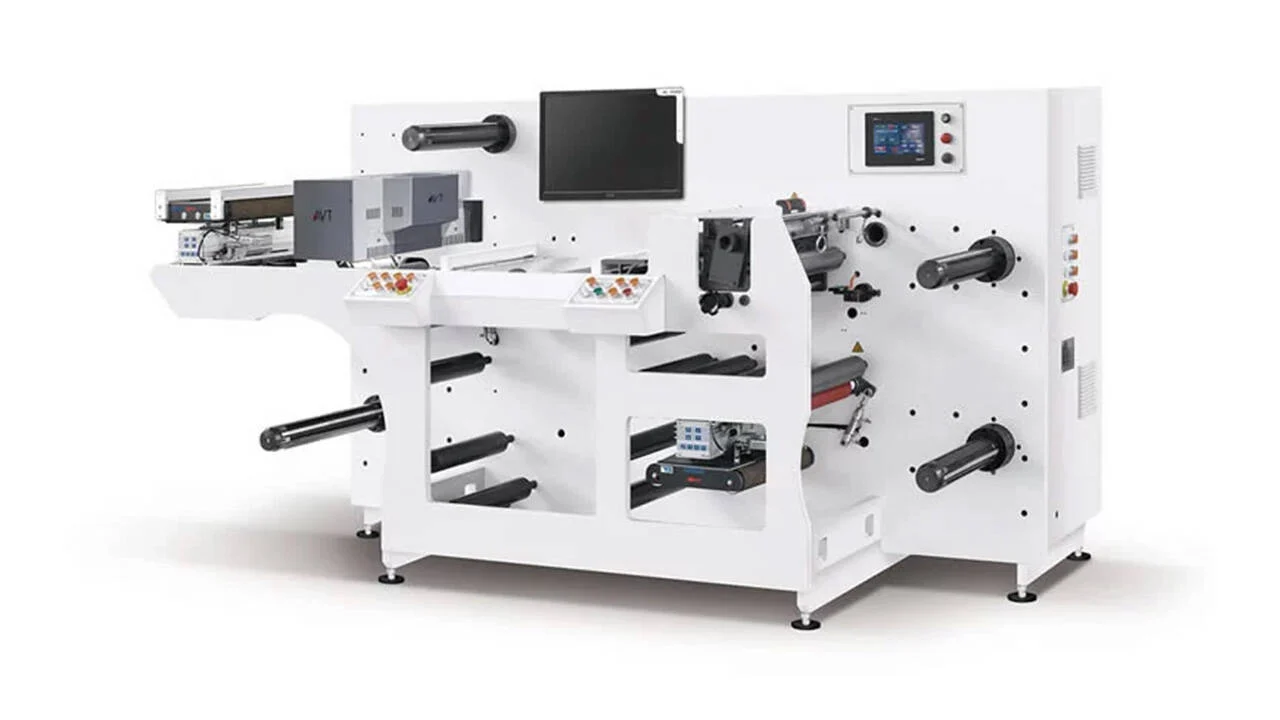
The printing industry is constantly evolving, with printing methods continually improving and production workflows becoming increasingly automated. Technological innovations in prepress equipment play a vital role in ensuring cost savings and enhanced efficiency from the very start of a project.
This article provides a comprehensive overview of prepress equipment—including its various categories and advantages—to help you select the right tools for your projects.
1.What Is Prepress Equipment?
The prepress process begins with the receipt of files and concludes when the printing equipment is ready to execute a print job reliably and smoothly. Through a series of checks, proofing, and format conversions, teams or suppliers verify that fonts, colors, and dimensions are accurate, image resolutions meet requirements, and page imposition is correct.
Prepress equipment refers to the industrial machinery used in the preliminary stages of the printing workflow—such as processing original files, editing layouts, and producing printing plates. It is widely utilized across sectors including packaging, advertising, and publishing.
Its core function is to precisely convert digital design files into physical printing plates ready for the press. It also handles essential preparatory tasks like color calibration and surface activation, effectively determining the color fidelity and registration accuracy of the final printed product at the source. Research and standards established by industry organizations regarding color management further underscore how critical this stage is for ensuring predictable printing outcomes.
2.Key Types of Prepress Equipment
2.1Plate Washing Machine
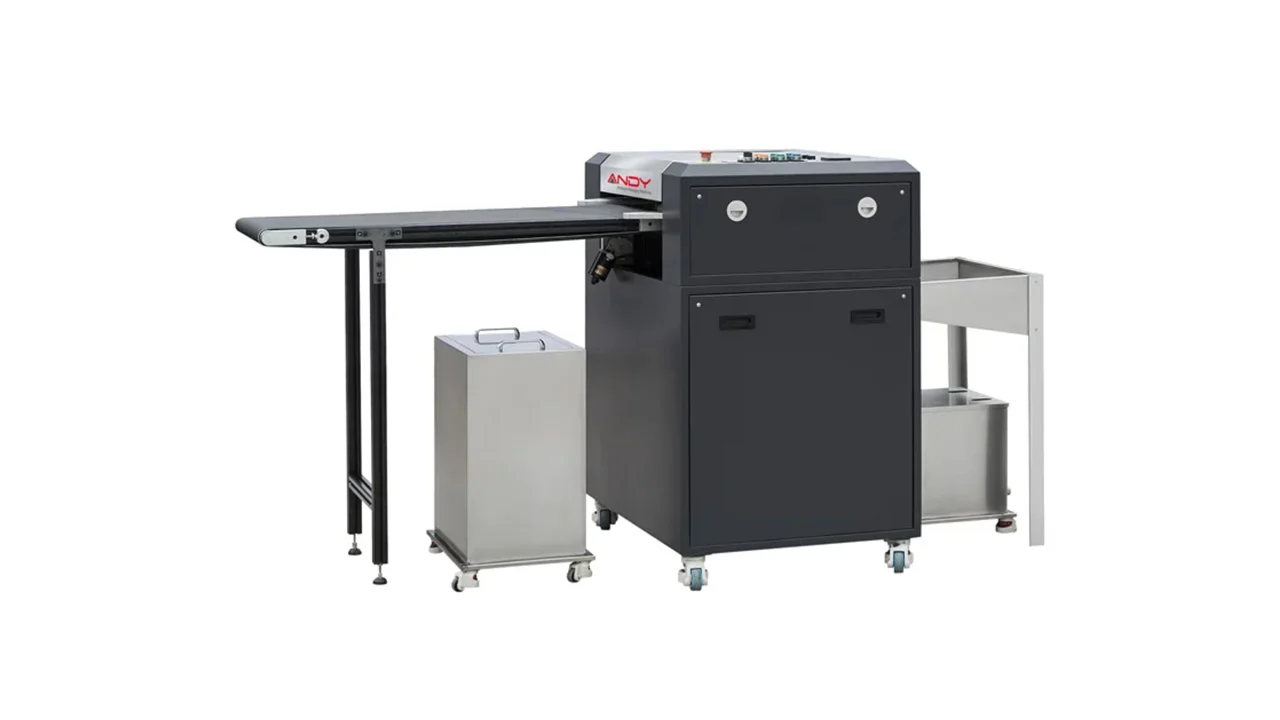
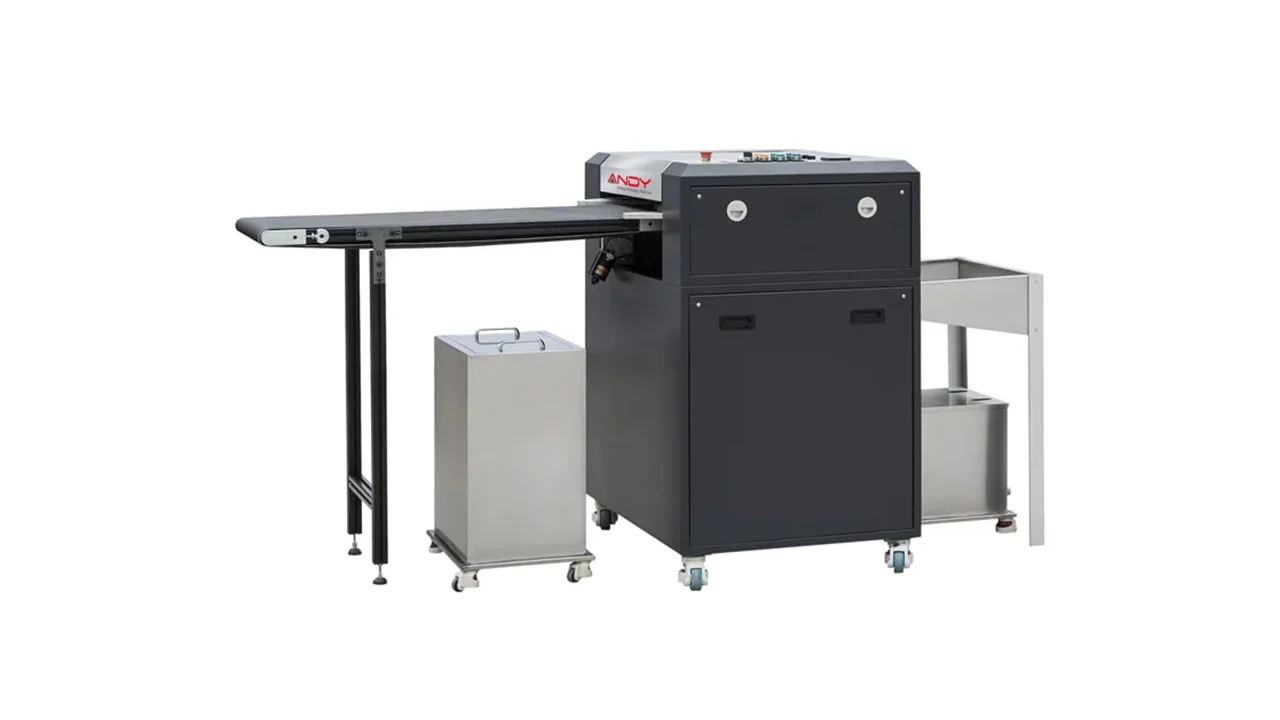
Plate Washing Machine are designed to rapidly remove residual ink, adhesive layers, and impurities from the surfaces of flexographic or resin printing plates after a print run. Replacing manual cleaning methods, these automated systems—featuring rotating spiral brushes, spray mechanisms, and water-circulation filtration—can clean a single plate in about ten seconds. The process ensures the plate surface remains free from scratches, significantly extending the plate’s reusable lifespan.
Such equipment supports a full range of printing applications, from narrow-web labels to wide-format corrugated cardboard boxes. These systems integrate cleaning, rinsing, and drying into a single workflow. Furthermore, the cleaning solution can be recycled, which reduces the cost of consumables and minimizes the exposure of operators to harmful solvent vapors—making these units an essential auxiliary tool for production environments that require frequent job changes.
2.2Paper Core Cutting Machine
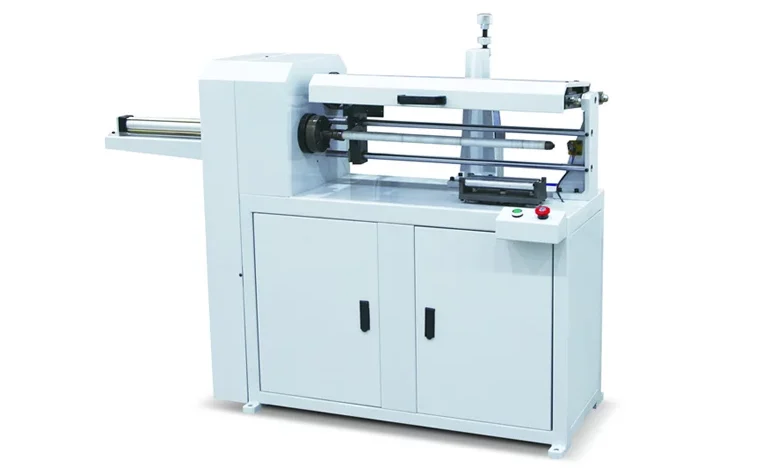
Paper core cutting machines typically utilize a servo motor paired with a ball-screw drive, combined with a pneumatic circular blade or rotary cutting mechanism. They offer cutting precision down to the millimeter level, ensuring smooth, burr-free edges. Certain dust-free models are also designed to prevent the scattering of paper debris during the cutting process.
These machines support flexible adjustment of cutting widths—ranging from just over ten millimeters to over a thousand millimeters—making them suitable for processing paper cores used in industries such as textiles (yarn), adhesive tapes, and plastic films. They significantly boost production efficiency for paper tube cutting while minimizing errors associated with manual operation.
2.3Plate Mounting Machine
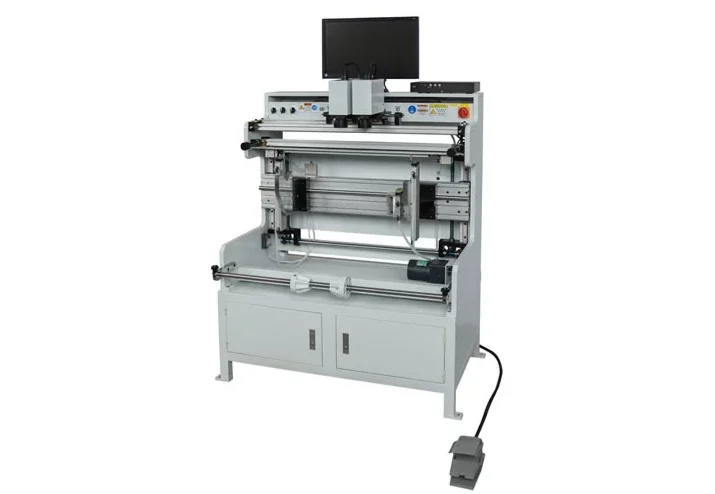
The primary function of a plate mounting machine is to replace traditional manual plate mounting, drastically improving both precision and efficiency. Equipped with a high-definition visual positioning system and high-precision mechanical clamps, these machines enable rapid alignment and attachment of printing plates to plate cylinders. This effectively prevents common issues such as plate stretching, misalignment, and trapped air bubbles, keeping registration tolerance within 0.005 mm.
Plate mounting machines are compatible with various types of printing plates, including flexographic and resin plates, and are used across sectors such as label printing, flexible packaging, and corrugated carton production. Automated models can complete the entire process—loading, positioning, and pressing—at the touch of a button. Compared to manual mounting, this cuts the time required for a single plate by more than half, while also significantly reducing the physical workload for operators.
3.Advantages of Prepress Equipment
Controlled Precision and Quality: Digital prepress equipment ensures precise, sharp dot reproduction and high consistency in plate making. It keeps registration errors within the millimeter range, greatly enhancing color fidelity in the final printed product.
Significantly Shorter Production Cycles: Equipment such as CTP (Computer-to-Plate) systems eliminates the need for traditional film output and manual imposition. This increases plate-making efficiency several times over compared to older technology, allowing tasks that once took two days to be completed in just half a day.
Substantial Reduction in Waste and Costs: Consistent plate-making quality increases the success rate of initial press setups, reducing plate-related waste by nearly 30% and minimizing unplanned downtime for printing presses.
Integration with Smart Production Lines: Through the JDF protocol, the equipment can connect with an enterprise’s ERP or MIS systems. This enables the automation of processes such as job ticket management, file pre-flighting, and imposition, thereby reducing the risk of human error.
High Long-Term Operational Stability: As a mature, proven model, the equipment boasts a low failure rate and supports extended, continuous production. It is well-suited to the scheduling requirements of printing facilities of various scales, ensuring a consistent output capacity.
Conclusion
As technology within the printing industry continues to evolve, a thorough understanding of prepress equipment will help you select the right machinery for your specific projects. If you are looking for high-quality printing equipment, please feel free to contact us.